
This post contains affiliate links. As an Amazon Associate I earn from qualifying purchases.
Make this once on Sunday and eat well all week. I’m talking about creating your own chai spice blend—a powerhouse seasoning that takes five minutes to assemble and transforms everything from your morning almond baked oats to your Friday dinner bowl. This is meal prep at its finest: one-time effort, unlimited flavor payoff.
Chai Seasoning Recipe Meal Prep: Cook Once, Season All Week
I discovered the magic of homemade chai spice blend during my second year as a registered dietitian when I was burning out on restaurant work. I’d come home exhausted, crack open a store-bought chai latte mix, and wonder why it tasted so artificial. One Sunday, frustrated and caffeinated on bad coffee, I grabbed my spice cabinet and started experimenting. Forty-five minutes later, I had a custom blend that made me excited to cook again. That single jar changed everything about my weekly meal prep rhythm.
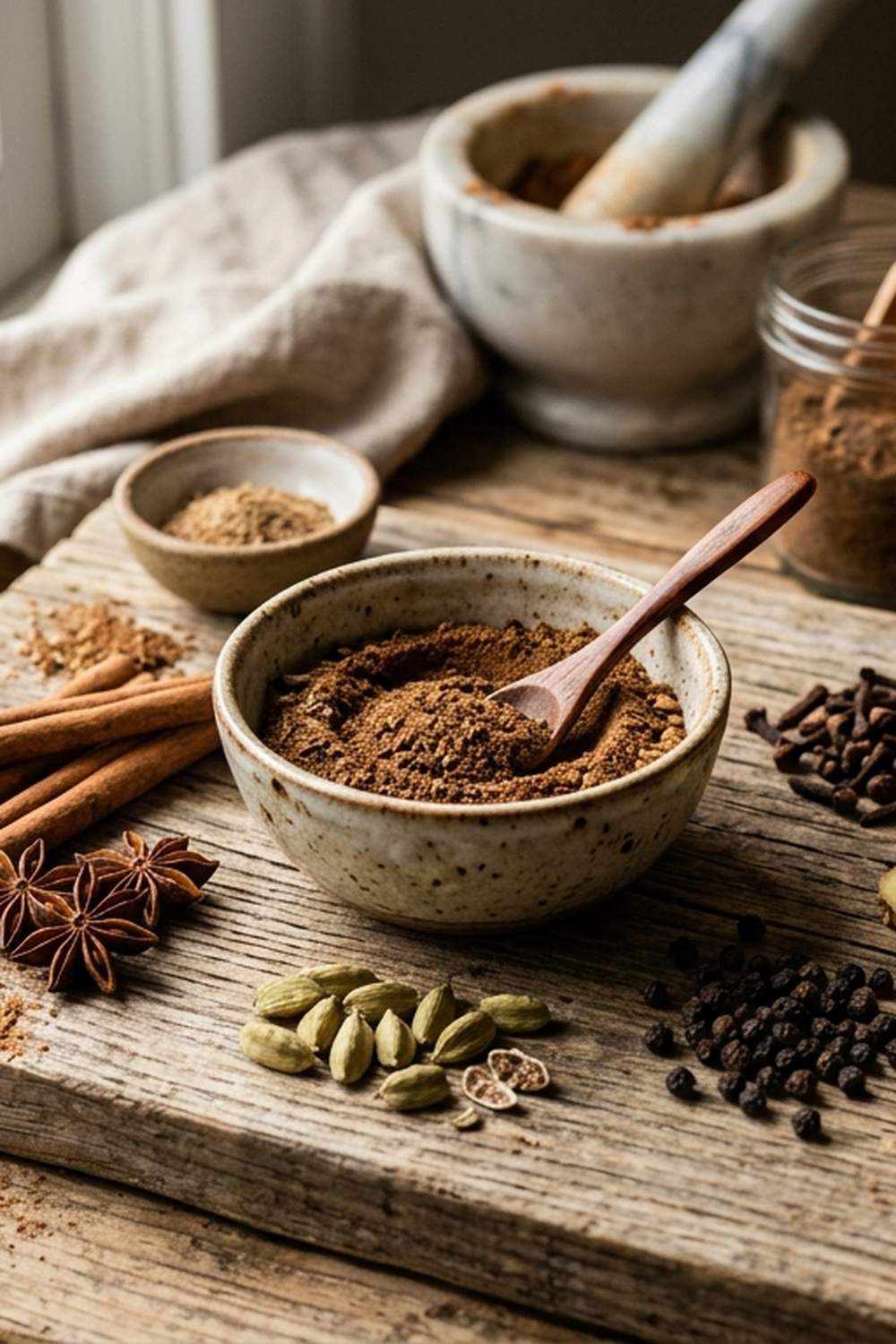
What started as a personal experiment became the foundation of my meal prep system. When you have a stellar spice blend ready to go, you’re not just saving time—you’re removing the friction between intention and action. No more standing in front of your spice rack at 6 p.m., too tired to think creatively. You’ve already done the thinking.
Why This Recipe Is Perfect for Meal Prep
- One-time blend = infinite applications – Mix this once and use it across 10+ different meals throughout the week without touching a single spice jar again
- Improves with age – Unlike fresh herbs, this blend actually gets more cohesive and complex as the flavors marry over 5-7 days, making Wednesday’s portions taste better than Monday’s
- No cooking required – This is a dry blend that stores at room temperature for up to 12 months, meaning zero food safety concerns and maximum convenience for grab-and-go mornings
Your Weekly Meal Plan With This Recipe
Here’s exactly how I use one batch of chai seasoning across my entire week. The beauty is that this single blend works across breakfast, lunch, dinner, and even snacks—no redundancy, pure strategic eating.
- Monday morning breakfast – Sprinkle ¼ teaspoon into your oatmeal with honey and yogurt for warm, spiced comfort
- Tuesday lunch bowl – Add ½ teaspoon to roasted sweet potatoes, black beans, and kale for a savory-spiced base
- Wednesday dinner protein – Mix ½ teaspoon into ground turkey or lentils with coconut milk for a chai-inspired curry situation
- Friday dessert – Dust ¼ teaspoon over keto pumpkin cheesecake or homemade healthy oatmeal cookies for sophisticated warmth
- Sunday reset smoothie – Blend ⅛ teaspoon into your banana whey shake for a seasonal twist
The Ingredients – Scaled for a Full Week
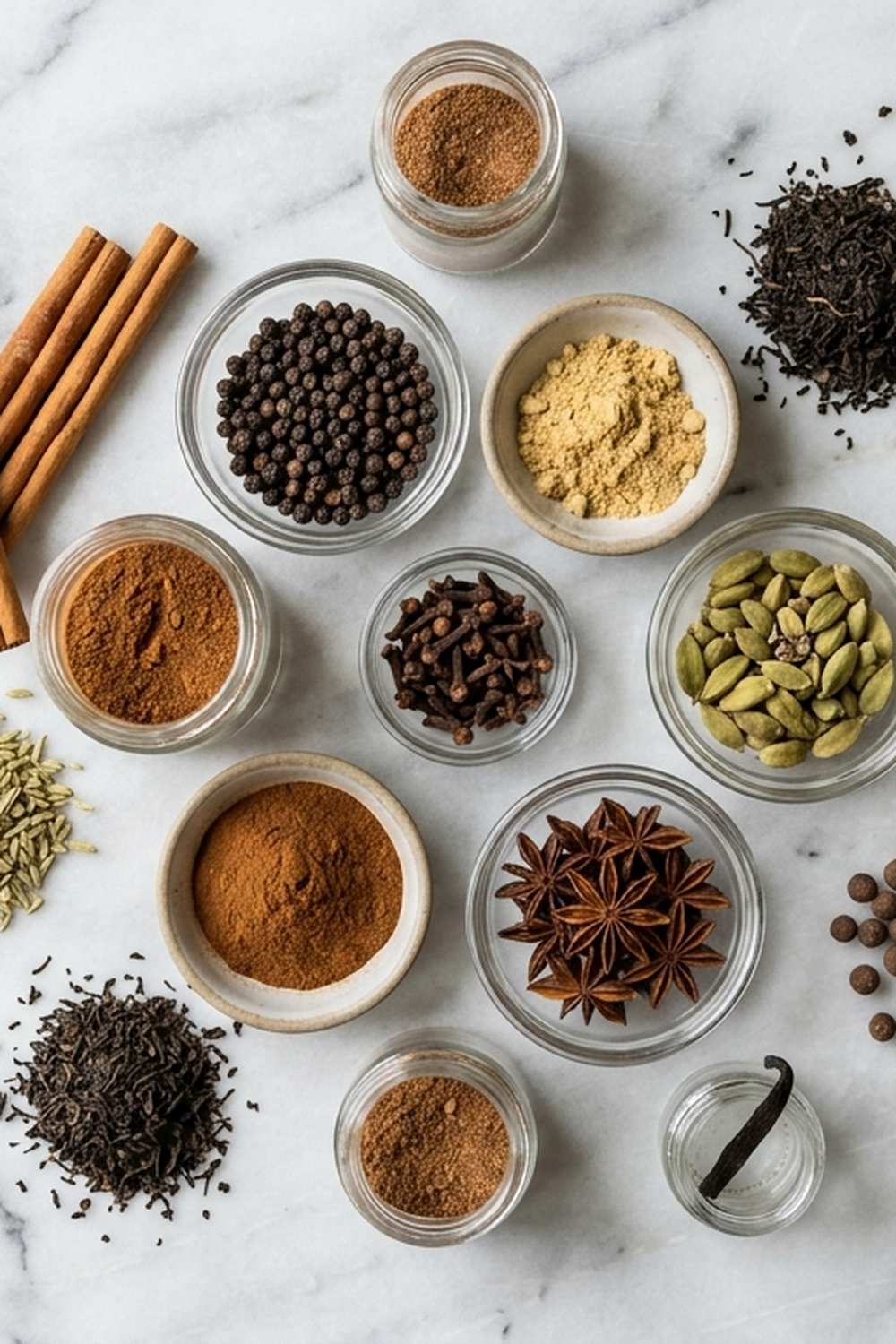
This recipe scales beautifully because you’re working with dry ingredients. I’m giving you enough to fill a standard 8-ounce mason jar, which provides roughly 25-30 teaspoon servings. That covers a full week of strategic seasoning plus extra for experimentation. Since these are dried spices, they’re shelf-stable and won’t degrade if you make a larger batch.
- ½ tablespoon ground cloves (powerful stuff; measure carefully or your blend becomes clove-dominant and overwhelming)
- ½ tablespoon ground nutmeg (freshly grated is ideal, but pre-ground works perfectly fine for a seasoning blend)
- ½ tablespoon ground allspice (warming and slightly peppery; don’t skip this—it’s the secret depth layer)
- ¼ teaspoon sea salt (my addition; magnifies all the spice flavors and prevents the blend from tasting flat or one-dimensional)
- 3 tablespoons ground cinnamon (Ceylon cinnamon has a sweeter profile; cassia is bolder—choose based on your preference and what you have on hand)
- 1 tablespoon ground cardamom (the star player here; buy whole pods and grind yourself for maximum freshness, or use pre-ground for convenience)
- ¼ teaspoon black pepper (my addition; adds subtle heat and helps your palate perceive the warmer spices more vividly)
- 1 tablespoon ground ginger (fresh ginger root adds brightness, but ground ginger provides consistency for meal prep blending)
Expert’s Nutritional Tip
Here’s something I always tell clients: these spices aren’t just flavor vehicles. Cinnamon contains polyphenols that support blood sugar stability, cardamom aids digestion (which is why chai is traditionally served after meals), and ginger provides natural anti-inflammatory compounds. When you use ½ teaspoon in a savory dish, you’re getting micro-doses of these bioactive compounds without any added calories. This is nutrient density in action. The spices themselves contain virtually zero macronutrients but deliver measurable micronutrient benefits. This is why homemade blends beat pre-made mixes every time—you control the ratio and quality.
The Meal Prep Process: How to Make Chai Seasoning in Bulk
This isn’t just dumping spices into a jar. There’s a system that ensures your blend stays aromatic and flavorful all week. I’ve streamlined this into a five-minute process that requires zero special equipment beyond what you already have.
Step 1: Gather Your Spices in a Clear Work Zone
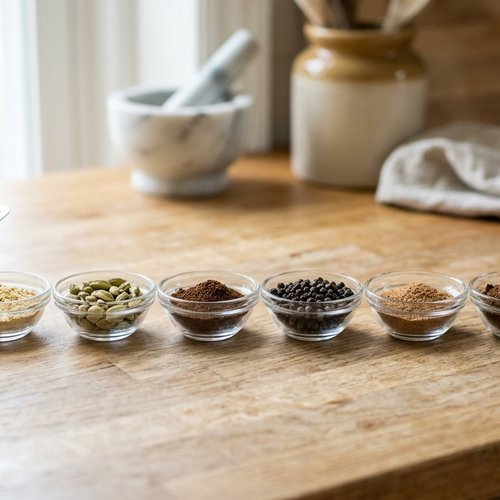
Pull every spice you need and arrange them in the order you’ll use them. This prevents double-measuring or forgetting an ingredient—I line them up left to right like a mise en place. Use a small spoon or measuring spoon you’ve designated for spice work only (not the one you use for baking, as cross-contamination changes flavors). Clear your counter completely so you’re not working around clutter.
Step 2: Measure Ground Cinnamon as Your Base
Cinnamon is your anchor spice—it’s mild enough to carry the blend but prominent enough to define it. Measure 3 tablespoons directly into your glass jar. I use the spoon-and-level method: spoon the cinnamon into the measuring spoon, then level with a straight edge rather than scooping directly from the container, which compacts the spice and throws off your ratios. Tap the jar gently to settle the cinnamon into the bottom.
Step 3: Add the Warm Spices in Descending Amounts
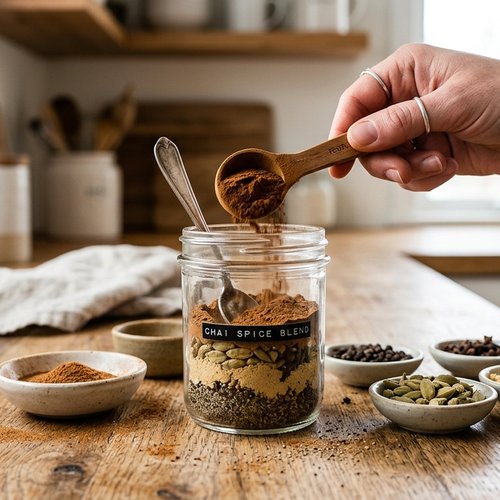
Now layer in your cardamom (1 tablespoon), ginger (1 tablespoon), allspice (½ tablespoon), cloves (½ tablespoon), and nutmeg (½ tablespoon). Add each one in its own layer rather than stirring between additions. This creates distinct flavor pockets that you’ll blend together in the next step, ensuring even distribution. Your jar should be about two-thirds full at this point. Add the black pepper and sea salt last—these are your precision ingredients that tie everything together.
Step 4: Seal and Shake With Purpose
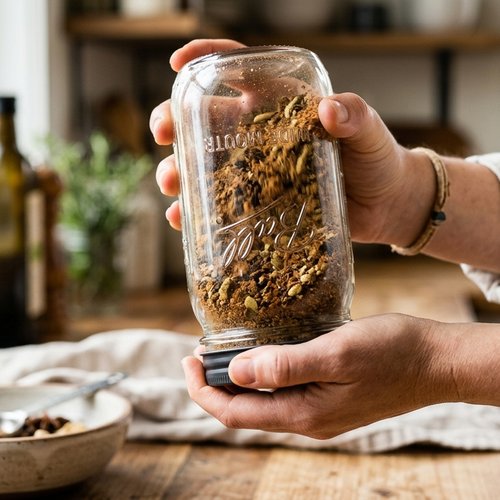
Screw the lid on tight. I’m talking sealed-tight, no-spillage-when-inverted sealed. Now shake vigorously for exactly 30 seconds. Set a timer—this matters because 30 seconds distributes everything evenly without over-blending into a paste. After 30 seconds, tip the jar upside down and shake for another 15 seconds to ensure any spices that settled get re-incorporated. Open the lid and do a visual check: you should see a relatively uniform mixture with no obvious clumps of single spices visible.
Step 5: Label and Store Strategically
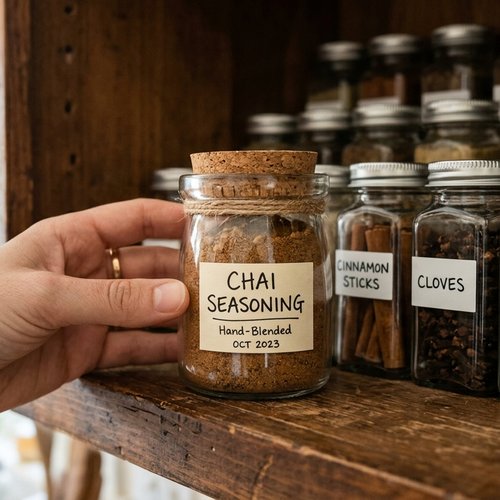
Use a waterproof label (or masking tape and permanent marker if you’re keeping it real) to write the date you made this blend and the contents: “Chai Spice Blend – [Date].” Store in a cool, dark cabinet away from direct sunlight and heat sources—the back of your spice cabinet is perfect, not above your stove where steam and temperature fluctuations degrade spice potency. A sealed glass jar in these conditions keeps your blend aromatic and potent for a full year. Shake briefly before each use to re-incorporate any oils that have settled.
Storage and Organization System
- Glass jars with airtight lids – I use 8-ounce mason jars because they’re cheap, stackable, and the clear glass lets you see when you’re running low without opening the jar and releasing aromatics
- Back-of-cabinet placement strategy – Store away from your stove, windows, and anywhere moisture accumulates; temperature stability is everything for dried spice longevity
- Waterproof label system – Use masking tape and permanent marker, or buy waterproof labels; you’ll glance at dates and grab with confidence without second-guessing freshness
How to Reheat Without Losing Quality
Here’s the thing about spice blends: they don’t need reheating. You’re not cooking the spices—you’re adding them to foods that are already prepared or cooking them together with other ingredients. If you’ve mixed this blend into oatmeal on Monday, it stays fresh in your refrigerator for 5 days. If you’ve added it to a grain bowl, the spices actually improve as they meld with the other ingredients overnight. The only time you’d worry about reheating is if you’ve added this blend to a hot dish like curry or roasted vegetables, in which case microwave at 60% power for 45-60 seconds to avoid overheating and drying out your food. Stovetop reheating in a small skillet over medium heat for 2-3 minutes is even better—you’ll revive some of the spice aromatics that may have faded.
Can I Freeze Chai Spice Blend?
Honestly? You don’t need to. This is dry spice—freezing offers zero benefit and actually introduces moisture when it thaws, which degrades flavor faster. Keep it in your cabinet at room temperature and it’ll outlast frozen storage by months. That said, if you want to prepare spiced foods in advance and freeze them, that works perfectly fine. A chai-spiced curry or roasted vegetable blend stays flavorful frozen for up to 3 months. Thaw overnight in the refrigerator and reheat gently over medium heat, adding a splash of broth or water to restore moisture. The spices themselves remain potent through freezing—it’s the texture of the accompanying food that matters more.
Nutrition Information
Per teaspoon serving: 5 calories, 0g protein, 1g carbohydrates, 0g fat, 0g saturated fat, 0mg sodium, 0mg cholesterol. These spices provide trace amounts of manganese, iron, and antioxidant compounds. When you use this blend strategically across your week—adding ½ teaspoon to curries, ¼ teaspoon to oatmeal, ⅛ teaspoon to smoothies—you’re getting cumulative benefits of cinnamon’s chromium content (which supports glucose metabolism), cardamom’s digestive aids, and ginger’s gingerol compounds that support circulation. USDA data shows that whole spices retain 95% of their micronutrient profile for approximately 12 months when stored properly, making homemade blends superior to older pre-mixed versions sitting on grocery store shelves for unknown timeframes.
What to Pair With Chai Spice Blend Throughout the Week
This blend is wildly versatile, but strategic pairing prevents flavor fatigue. I rotate my pairings throughout the week so my palate stays engaged and meals feel intentional, not repetitive. The spices work with both sweet and savory, warm and cold applications.
- Monday breakfast – Pair with creamy coconut yogurt, sliced apple, and toasted walnuts; the spices harmonize with fruit and nuts in a way that feels naturally balanced
- Tuesday lunch – Mix into roasted butternut squash, quinoa, and crispy chickpeas; the warming spices elevate humble vegetables into something restaurant-quality
- Wednesday dinner – Blend into ground turkey with tomatoes, white beans, and spinach for a chai-inspired saucy situation that tastes like you spent three hours cooking
- Thursday snack – Dust over Greek yogurt mixed with honey and granola; the spices add sophisticated flavor without requiring additional cooking
- Friday dessert – Sprinkle into brownie batter, oat cookies, or over vanilla ice cream; these spices belong in dessert as much as in savory food
Common Mistakes to Avoid
Mistake 1: Measuring by Dipping Spoons Directly Into Containers
When you scoop your measuring spoon directly into the spice jar, you’re compacting the spice and throwing off your measurements. A packed tablespoon of cinnamon contains 50% more spice than a spooned-and-leveled tablespoon. Always spoon the spice into your measuring tool, then level with a straight edge. This consistency matters when you’re balancing five different spices—one miscalibration throws off your entire blend’s harmony.
Mistake 2: Using Spices Older Than Six Months Unless Vacuum-Sealed
If you already had ground cardamom sitting in your spice cabinet for a year before adding it to this blend, you’re starting with degraded spice. Check your existing spices: do they smell potent when you open the jar? If you’re getting a whiff of flavor, they’re still good. If you’re getting nothing, replace them. This blend is only as good as your weakest ingredient, so audit your spice cabinet before you start. Whole spices ground fresh last longer than pre-ground versions, but if convenience matters more to you than maximum potency, pre-ground works perfectly fine—just verify they’re reasonably fresh.
Mistake 3: Storing Above Your Stove or Near Windows
Heat and light are the enemies of dried spices. If your kitchen has limited cabinet space and you’re tempted to store your chai blend near your stove for “convenience,” resist. The steam, heat fluctuations, and ambient humidity will degrade your blend in weeks instead of months. Find the back of your coolest, darkest cabinet—even if it’s less accessible—and your spices will reward you with months of consistent flavor. A small sacrifice in convenience yields massive payoff in quality.
Mistake 4: Over-Shaking After the Initial Blend
Your first 30-second shake distributes ingredients. If you keep shaking every time you use it, you’re not gaining anything. In fact, excessive shaking can cause the finer particles (like nutmeg dust) to separate from the larger pieces. Make your blend once, shake thoroughly that one time, then leave it alone. A gentle shake before each use is fine, but vigorous daily shaking is unnecessary and actually counterproductive. The spices blend themselves over a few days as their aromatics marry together.
Seasonal Variations
Fall and Winter Version (October-February)
Increase your cloves to ¾ tablespoon and nutmeg to ¾ tablespoon. Decrease cardamom to 1½ teaspoons. This shifts the blend toward deeper, earthier spices that pair beautifully with squash, root vegetables, and heavier dishes. Use this version in your curries, roasted vegetable bowls, and baked goods during colder months.
Spring and Summer Version (March-September)
Keep cardamom at a full tablespoon, reduce cloves to ¼ tablespoon, and increase ginger to 1½ tablespoons. This creates a brighter, more refreshing blend that works better with lighter proteins, fresh vegetables, and chilled applications. Use this in smoothies, yogurt parfaits, and lighter grain bowls.
Dessert-Forward Variation
If you’re using this primarily in sweet applications, add ½ tablespoon of ground vanilla bean powder (or ¼ teaspoon vanilla extract powder). This isn’t traditional chai, but it creates an elegant dessert spice blend that works beautifully in baked goods. This variation is less versatile for savory applications, so make it in a separate jar if you want both options available.
Chai Seasoning Recipe

Ingredients
- ½ tablespoon ground cloves powerful stuff; measure carefully or your blend becomes clove-dominant and overwhelming
- ½ tablespoon ground nutmeg freshly grated is ideal, but pre-ground works perfectly fine for a seasoning blend
- ½ tablespoon ground allspice (warming and slightly peppery; don't skip this
- ¼ teaspoon sea salt my addition; magnifies all the spice flavors and prevents the blend from tasting flat or one-dimensional
- 3 tablespoon ground cinnamon (Ceylon cinnamon has a sweeter profile; cassia is bolder
- 1 tablespoon ground cardamom the star player here; buy whole pods and grind yourself for maximum freshness, or use pre-ground for convenience
- ¼ teaspoon black pepper my addition; adds subtle heat and helps your palate perceive the warmer spices more vividly
- 1 tablespoon ground ginger fresh ginger root adds brightness, but ground ginger provides consistency for meal prep blending
Instructions
Step 1: Gather Your Spices in a Clear Work Zone
- Pull every spice you need and arrange them in the order you'll use them. This prevents double-measuring or forgetting an ingredient—I line them up left to right like a mise en place. Use a small spoon or measuring spoon you've designated for spice work only (not the one you use for baking, as cross-contamination changes flavors). Clear your counter completely so you're not working around clutter.
Step 2: Measure Ground Cinnamon as Your Base
- Cinnamon is your anchor spice—it's mild enough to carry the blend but prominent enough to define it. Measure 3 tablespoons directly into your glass jar. I use the spoon-and-level method: spoon the cinnamon into the measuring spoon, then level with a straight edge rather than scooping directly from the container, which compacts the spice and throws off your ratios. Tap the jar gently to settle the cinnamon into the bottom.
Step 3: Add the Warm Spices in Descending Amounts
- Now layer in your cardamom (1 tablespoon), ginger (1 tablespoon), allspice (½ tablespoon), cloves (½ tablespoon), and nutmeg (½ tablespoon). Add each one in its own layer rather than stirring between additions. This creates distinct flavor pockets that you'll blend together in the next step, ensuring even distribution. Your jar should be about two-thirds full at this point. Add the black pepper and sea salt last—these are your precision ingredients that tie everything together.
Step 4: Seal and Shake With Purpose
- Screw the lid on tight. I'm talking sealed-tight, no-spillage-when-inverted sealed. Now shake vigorously for exactly 30 seconds. Set a timer—this matters because 30 seconds distributes everything evenly without over-blending into a paste. After 30 seconds, tip the jar upside down and shake for another 15 seconds to ensure any spices that settled get re-incorporated. Open the lid and do a visual check: you should see a relatively uniform mixture with no obvious clumps of single spices visible.
Step 5: Label and Store Strategically
- Use a waterproof label (or masking tape and permanent marker if you're keeping it real) to write the date you made this blend and the contents: "Chai Spice Blend - [Date]." Store in a cool, dark cabinet away from direct sunlight and heat sources—the back of your spice cabinet is perfect, not above your stove where steam and temperature fluctuations degrade spice potency. A sealed glass jar in these conditions keeps your blend aromatic and potent for a full year. Shake briefly before each use to re-incorporate any oils that have settled.
Nutrition
FAQs
Can I Buy Pre-Made Chai Spice Instead of Making My Own?
You absolutely can, and sometimes convenience wins. But here’s my registered dietitian perspective: commercial chai blends often contain added sugars, anti-caking agents, and spices that have been sitting in warehouses for months. Making your own takes five minutes, costs less per serving, and delivers superior flavor because you’re using fresher spices. If store-bought appeals to you, read the ingredient label carefully—you want just spices, nothing else. Avoid anything with “natural flavors” or added sweeteners. My philosophy is always: if you can make it yourself with ingredients you recognize in under 10 minutes, why not? But I also live in reality, where sometimes pre-made wins out due to time constraints. Choose based on your actual life, not your ideal life.
How Much of This Blend Should I Use Per Serving?
This depends entirely on your application and spice tolerance. For oatmeal (serving 1 person): ¼ teaspoon. For a curry serving 4 people: 1-1½ teaspoons. For yogurt: ⅛ teaspoon. For baked goods: ½ teaspoon per 12 cookies or one small cake. Start with less—you can always add more, but you can’t remove spice once it’s blended. Your palate will guide you. If you enjoy bold spice, use more. If you’re sensitive, use less. There’s no one-size-fits-all answer.
Can I Use This Blend in Cold Beverages Like Smoothies?
Completely. In fact, this is one of my favorite applications. Blend ⅛-¼ teaspoon into your smoothie with banana, milk, and yogurt for a chai latte situation without requiring any cooking. The spices dissolve into the liquid and distribute evenly. Cold applications let the spices shine without the muting effect that sometimes happens when they’re added to very hot dishes. Try it in your banana whey shake as a warm-spice twist.
What’s the Difference Between Ground and Whole Spices, and Which Should I Use?
Whole spices (like cardamom pods or whole nutmeg) retain their essential oils longer and deliver more potent flavor when freshly ground. Ground spices (like the ones I’m using here) sacrifice some longevity for convenience. For meal prep purposes, ground spices are superior because you’re blending multiple spices and need them to distribute evenly. If you want to grind your own cardamom pods, go for it—the flavor will be noticeably brighter. But if that feels like overkill, use pre-ground and focus on buying from sources with high turnover. Your spice freshness matters more than the format you buy it in.
Does This Blend Work in Savory Applications Like Rice Dishes or Meat Marinades?
Yes, and this is where the blend truly shines. Add ½ teaspoon to a pot of jasmine rice (for 2 cups uncooked rice) and cook as normal—the spices infuse throughout. Mix into ground beef or turkey before browning for a curry-inspired base. Rub onto salmon before baking. Stir into copycat Qdoba chicken burrito bowls for unexpected warmth. These spices are historically used in savory Indian and Middle Eastern cooking, so they belong in hearty, protein-forward dishes. The sweet-spicy profile works beautifully with umami-rich foods.
More Meal Prep Recipes You’ll Love
- Air Fryer Zucchini Bites Recipe – Crispy, seasoned vegetables that hold up all week and taste better the next day
- Air Fryer Salmon Bites Bowl Recipe – Perfectly portioned protein that stays moist throughout the week when stored properly
- Air Fryer Honey Salmon Bites Recipe – Sweet and savory combination that takes five minutes to prepare in bulk
You now have the system to control your week through strategic seasoning. One jar of chai spice blend removes friction from every meal decision. No more standing in front of your pantry wondering what to add for flavor. No more reaching for imitation extracts or processed spice packets. You’ve got complex, sophisticated seasoning ready to elevate oatmeal, curry, roasted vegetables, desserts, and everything in between. This is meal prep psychology at its finest: reduce decision fatigue, increase flavor consistency, and make cooking feel effortless. Make this blend once on Sunday, and I guarantee you’ll be making it again the next week. Your palate remembers quality. Celebrate your flavorful adventure!