
This post contains affiliate links. As an Amazon Associate I earn from qualifying purchases.
I’m obsessed with this air fryer salmon bites bowl. It’s the kind of meal that tastes like you spent hours in the kitchen when you actually spent minutes prepping. The crispy-edged salmon cubes paired with fluffy brown rice, creamy avocado, and a spicy yogurt drizzle hits every nutritional and flavor note I need on a busy weeknight. If you’re craving something with serious omega-3 power, check out my Baked Cod Tacos for another seafood option that proves air fryer fish is always a win.
The Day I Ditched My Fear of Cooking Salmon at Home
Three years ago, I was terrified of cooking salmon. I know—wild for someone with my credentials, right? But I had this memory of overcooked, dry salmon from a dinner party that haunted me. I kept ordering it at restaurants, paying premium prices, convinced I couldn’t replicate that restaurant magic at home.
Then I got my first air fryer. I decided to experiment with cubed salmon one Sunday evening, partly out of stubbornness and partly because I had fish in my fridge that needed using. I marinated it in a simple teriyaki-inspired blend, tossed those cubes into the basket at 400°F, and walked away. Seven minutes later? Perfectly crispy edges, tender interior, and the kind of caramelized glaze that made my kitchen smell like a high-end sushi spot.
That moment changed everything for me. I realized the air fryer’s dry, circulating heat was exactly what salmon needed to achieve that restaurant-quality exterior without drying out the flesh. Now it’s my go-to preparation method, and I’m sharing exactly how I do it so you can skip the restaurant bill.
What is Air Fryer Salmon Bites Bowl Recipe?
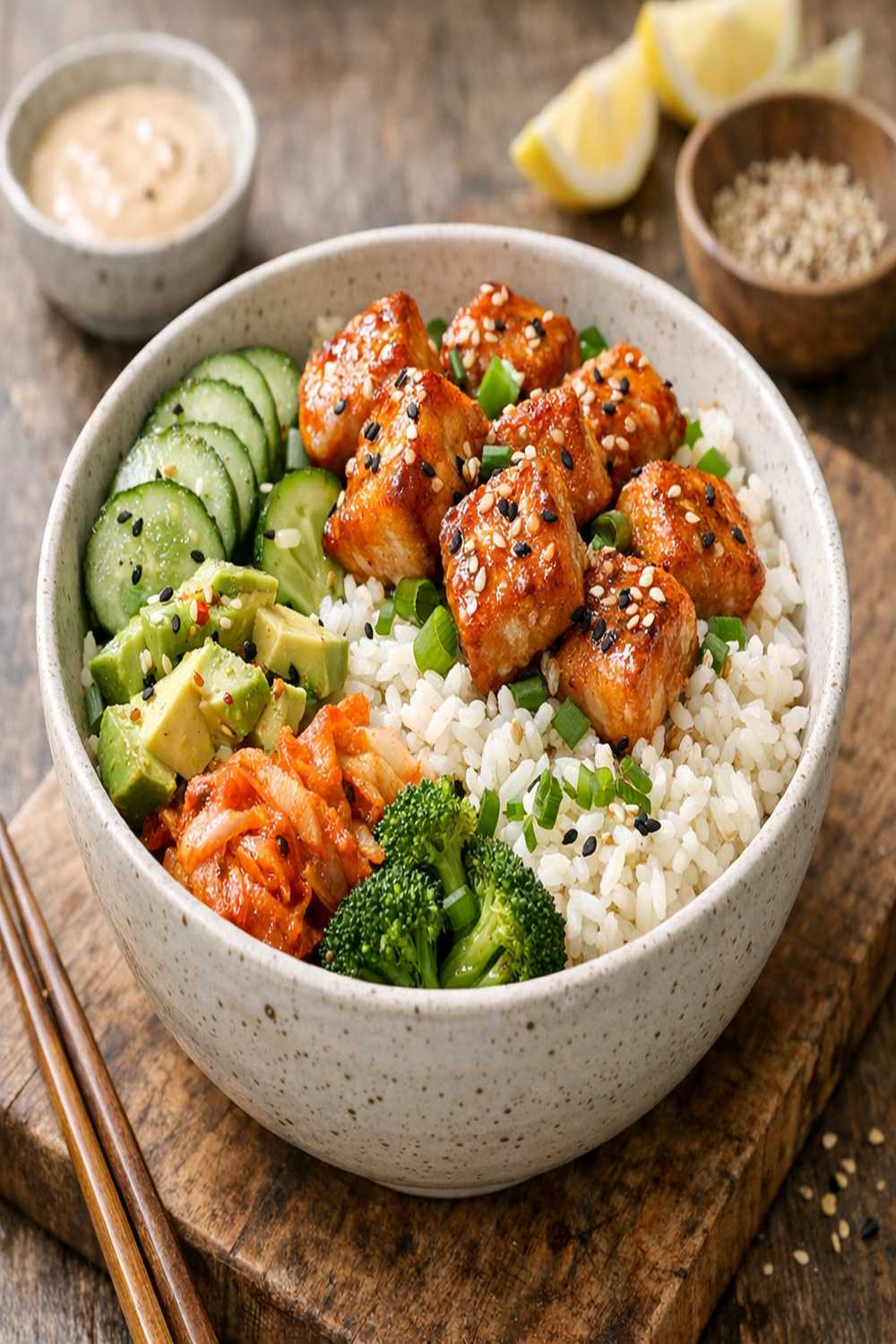
This is a vibrant, nutrient-dense bowl centered around bite-sized pieces of salmon that get air-fried until their edges caramelize with a glossy teriyaki glaze. The salmon sits on a bed of nutty brown rice, surrounded by edamame, fresh avocado, and topped with a spicy yogurt sauce that brings everything together.
The beauty of this recipe lies in its flexibility and speed. Unlike traditional baked salmon fillets, cubing the fish increases surface area, allowing the air fryer’s intense heat to create crispy, caramelized edges while keeping the center butter-tender. The bowl format makes it a complete meal—protein, whole grains, vegetables, and healthy fats all in one place.
This approach comes from my chef training blended with my dietitian background. Chefs know that cutting proteins into smaller pieces accelerates cooking and improves texture. Dietitians know that bowls encourage balanced eating by making every macronutrient visible and intentional.
Why You’ll Love This Air Fryer Salmon Bites Bowl Recipe
- Ready in under 20 minutes – This includes prep, marinade time, cooking, and assembly. No slow roasting. No lengthy prep work.
- Restaurant-quality presentation – The caramelized salmon edges and vibrant bowl layout look fancy enough to serve guests, but simple enough for solo dinners.
- Loaded with omega-3 fatty acids – One serving delivers approximately 2,000mg of EPA and DHA, the anti-inflammatory powerhouses your brain and heart actually need.
- Completely customizable – Swap grains, adjust heat levels, change proteins. This framework works with what’s in your pantry.
- Meal-prep friendly – Components keep separately for up to 4 days, meaning you can build fresh bowls throughout the week without repeat cooking.
- Budget-conscious – Salmon is cheaper than most restaurant entrees, and buying fish on sale makes this even more affordable than takeout sushi.
- No special equipment needed – Just an air fryer and basic kitchen knives. No food processor, no fancy gadgets required.
The Ingredients
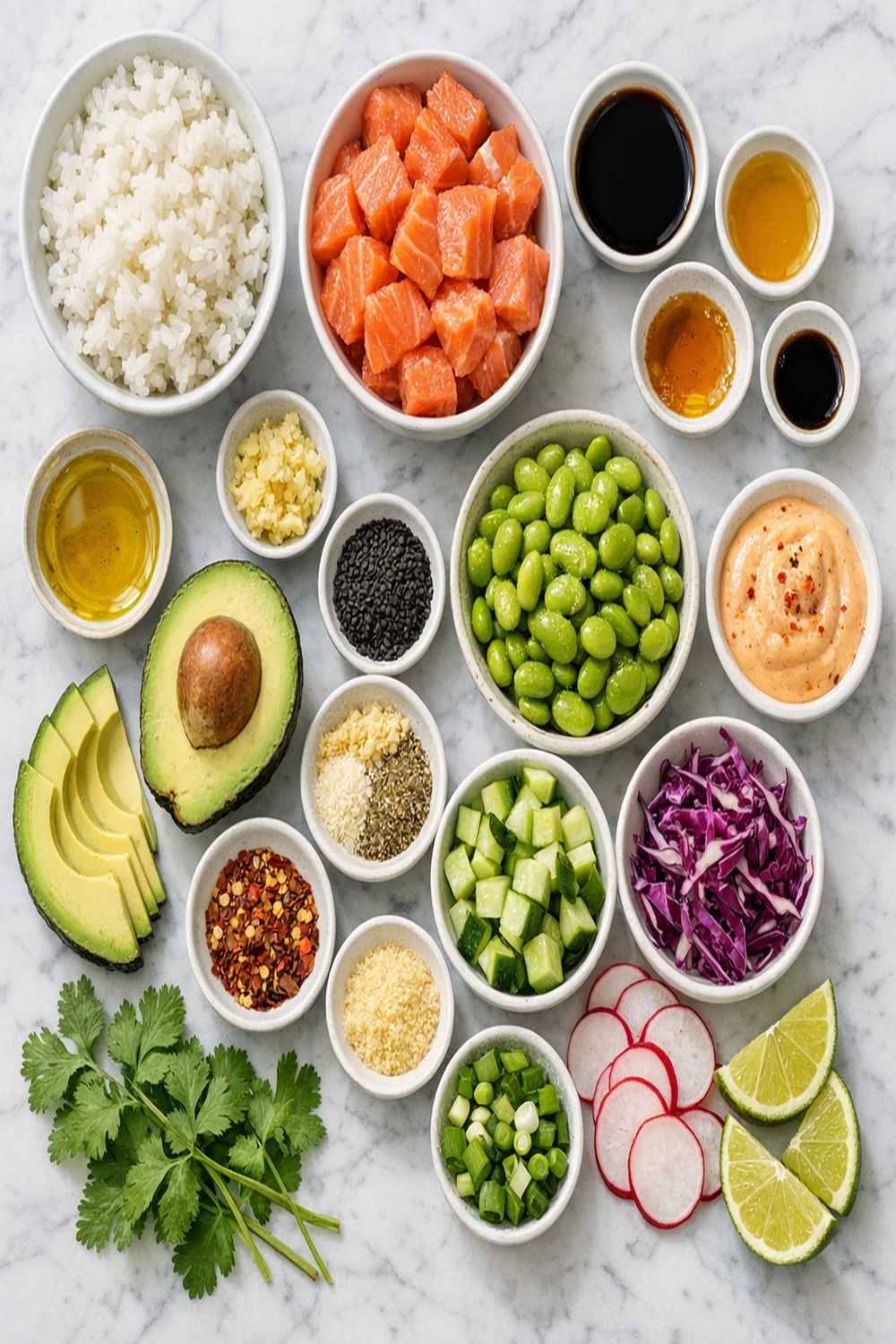
I’ve built this ingredient list around pantry staples and accessible proteins. Everything here is available at any standard grocery store, and several items probably live in your kitchen already. The ratio of marinade to salmon creates that crucial glaze without being overly wet.
For the Salmon and Marinade
- ½ teaspoon sea salt (fine grain helps it dissolve evenly into the marinade)
- 1 tablespoon raw honey (the natural sugars caramelize beautifully in the air fryer)
- 2 teaspoons sesame oil (toasted varieties add deeper flavor, but regular works fine)
- ½ teaspoon garlic powder (fresh garlic works too, but powder distributes more evenly)
- 4 salmon filets (6-8 ounces each, any variety—Atlantic, King, or Sockeye work beautifully)
- 4 tablespoons coconut aminos or tamari (soy sauce alternative that’s slightly sweeter and lower sodium)
For the Spicy Yogurt Sauce
- ½ teaspoon chipotle powder (adds smokiness without intense heat)
- ½ teaspoon smoked paprika (enhances the chipotle flavor profile)
- 1 teaspoon hot sauce (Frank’s RedHot or similar works perfectly)
- 1 teaspoon extra-virgin olive oil (helps sauce coat the bowl evenly)
- ¼ cup plain Greek yogurt (0% or 2% fat—both work; full-fat creates richness)
For the Bowl Base
- 1 ripe avocado (slice just before serving to prevent browning)
- 1 cup cooked edamame (fresh or frozen—no thawing needed)
- 3 cups cooked brown rice (cook fresh or use leftover rice)
Makes 4 bowls
How to Make Air Fryer Salmon Bites Bowl Recipe?
This recipe breaks into five clear phases: prepping the salmon, building the marinade, air frying, making the sauce, and assembling. Each step builds intentionally, and timing overlaps so nothing sits idle. I’ve included sensory cues so you know exactly what you’re looking for at each stage.
Step 1: Prepare Your Salmon
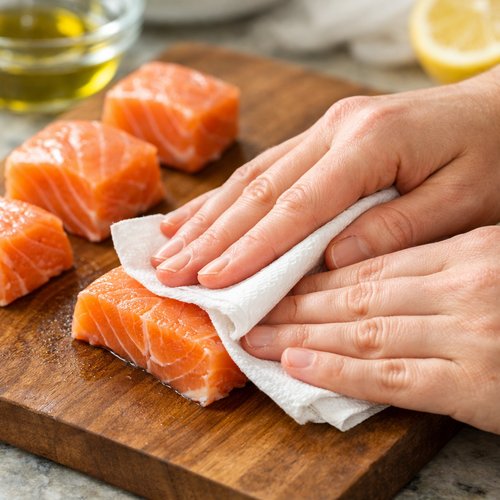
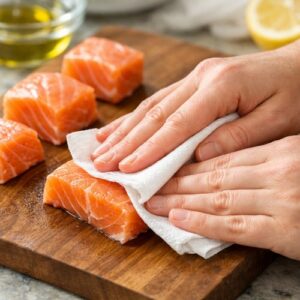
Pat your salmon filets completely dry using paper towels—this is not a skip-it step. Moisture prevents browning, and we want those edges crispy and caramelized. If the skin is still attached, use a sharp chef’s knife to gently separate it from the flesh, angling your blade almost parallel to the cutting board. Once skin-free, cut each filet into 2-inch cubes, working deliberately so pieces are relatively uniform in size. Uniform pieces cook evenly and caramelize together.
Step 2: Create the Teriyaki Marinade
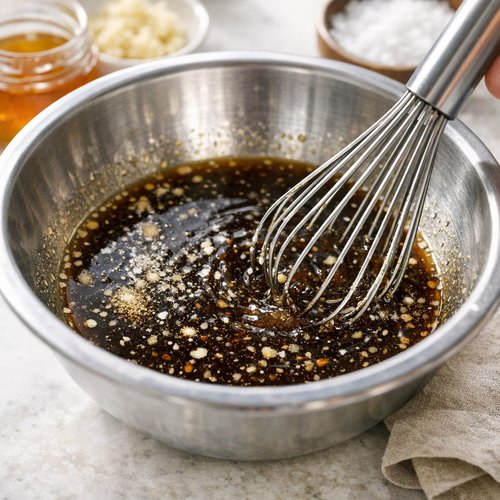
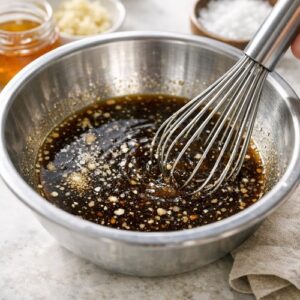
Pour the coconut aminos, sesame oil, honey, garlic powder, and sea salt into a medium mixing bowl. Whisk everything together until the salt dissolves and honey no longer clings to the whisk—you’re looking for a glossy, unified liquid about 30 seconds of whisking. Before adding salmon, remove and reserve 1 tablespoon of this marinade in a tiny separate bowl. You’ll drizzle this over the finished bowl for extra umami depth.
Add your salmon cubes to the larger marinade bowl and gently fold them together using a rubber spatula, making sure every surface gets coated. Let them sit for at least 3 minutes—the fish will start absorbing the liquid and flavors will begin permeating the flesh. You can prep your other bowl components while this happens.
Step 3: Air Fry the Salmon Cubes
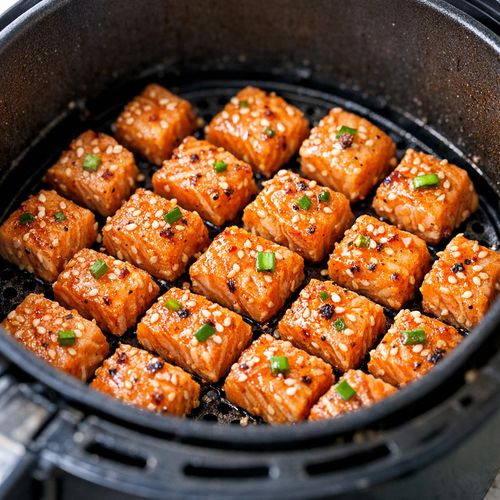
While the salmon marinates, preheat your air fryer to 400°F. Once ready, transfer your marinated salmon cubes to the air fryer basket in a single layer with space between each cube. Crowding the basket steams the fish instead of crisping it. If your basket is small, you might need to cook in two batches—that’s totally okay.
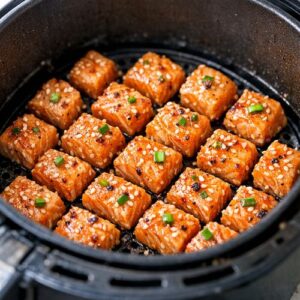
Set the timer for 7 minutes. Walk away. The circulating heat will render the outer surface while the interior stays tender and flaky. You’ll know it’s done when the edges have turned golden-bronze and slightly caramelized, and the marinade coating looks glossy and set rather than wet.
Step 4: Whisk the Spicy Yogurt Sauce
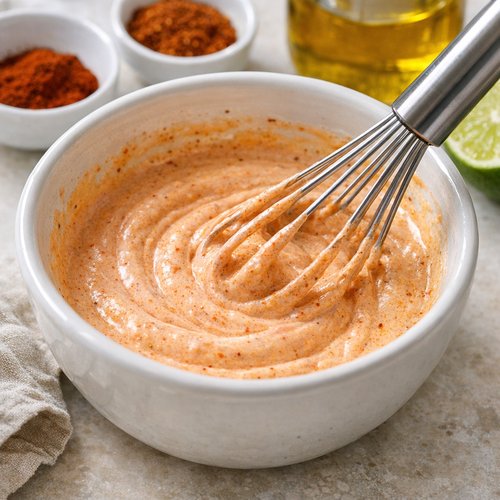
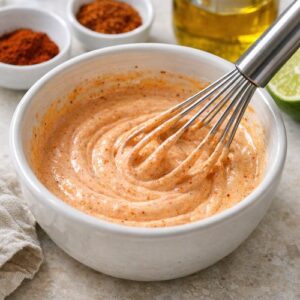
While the salmon cooks (perfect timing), combine the Greek yogurt, hot sauce, chipotle powder, smoked paprika, and olive oil in a small bowl. Whisk continuously until completely smooth with no powder streaks—this takes about 45 seconds. The sauce should be pourable but substantial, coating a spoon easily. If it feels too thick, add another ½ teaspoon of olive oil and whisk again.
Step 5: Assemble Your Bowl
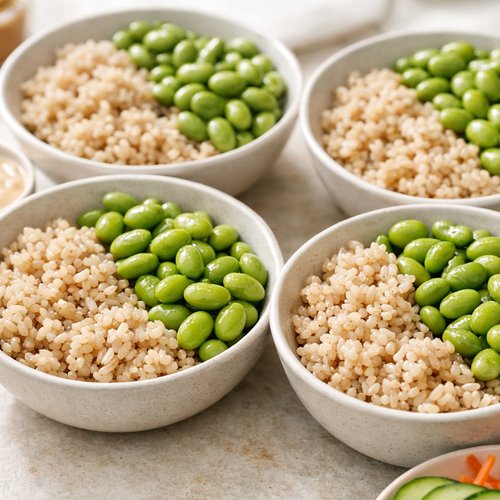
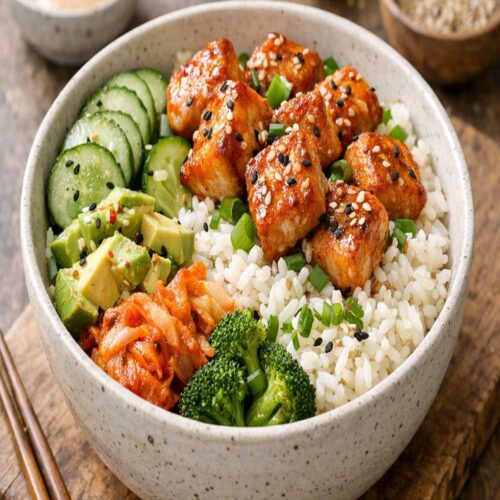
Grab four bowls. Divide the cooked brown rice equally among them, creating a base that fills about one-third of each bowl. Arrange cooked edamame in a small section of each bowl, then layer avocado slices in another section. Top the rice with the warm salmon cubes, distributing them evenly across all four bowls.
Drizzle each bowl with the reserved teriyaki marinade over the salmon pieces specifically—this adds an extra layer of flavor. Finally, drizzle the spicy yogurt sauce over the entire bowl, letting some pool in the rice and some coat the salmon. Serve immediately while the salmon is still warm and the avocado is fresh.
Expert’s Nutritional Tip
Here’s something many home cooks don’t realize: the marinating process actually improves salmon’s nutritional profile. The acidic components in coconut aminos and the sesame oil work together to help your body absorb the fat-soluble vitamins found in salmon more efficiently. The marinade isn’t just flavor—it’s working nutritionally alongside the protein. This is why I always insist on proper marinating time rather than skipping it for speed.
Tips and Tricks
- Use room-temperature salmon – Let filets sit out for 15 minutes before cubing. Cold fish takes longer to cook and doesn’t caramelize as evenly.
- Don’t skip the drying step – Moisture is the enemy of crispy edges. Pat aggressively.
- Invest in a sharp knife – A dull blade crushes salmon instead of cutting cleanly, damaging cell structure and affecting texture during cooking.
- Line your air fryer basket with parchment – Makes cleanup effortless and prevents any marinade sticking.
- Taste your sauce before serving – If it needs heat, add more hot sauce. If it needs smokiness, add more paprika. Customize to your preference.
- Brown rice can be made ahead – Cook it up to 5 days in advance and reheat before assembling bowls.
- Freeze edamame stays fresher longer – Keep a bag in your freezer and scoop directly into bowls without thawing; they’ll warm gently from the hot rice.
Make-Ahead Guide
Three days ahead: Cook your brown rice and store it in an airtight container in the refrigerator. Make the spicy yogurt sauce and refrigerate in a covered bowl.
One day ahead: Cut and marinate your salmon cubes, keeping them in a sealed container in the coldest part of your refrigerator. The extended marinade time actually deepens flavor without compromising texture.
Morning of: Slice your avocado only when you’re about to assemble—this prevents oxidation and browning.
At serving time: Reheat rice if needed, air fry your salmon cubes, and assemble. The entire assembly takes 5 minutes. This approach means you can meal-prep components across several days but still enjoy a fresh, restaurant-quality bowl without stress.
Common Mistakes to Avoid
- Overcrowding the air fryer basket – I see this constantly. Pieces need air circulation. If they touch, steam them instead of crisping. Work in batches if necessary.
- Using wet salmon – Skipping the patting-dry step guarantees rubbery, steamed fish instead of crispy edges. Worth the extra minute.
- Cooking at too low temperature – 375°F might seem safer, but 400°F is what creates that crucial caramelization. The Maillard reaction requires heat.
- Not reserving marinade for drizzling – This step seems optional until you taste the final bowl. That extra umami from the reserved marinade elevates everything.
Seasonal Variations
Spring: Swap edamame for steamed asparagus spears and add fresh lemon zest to your yogurt sauce. Spring greens replace some of the rice for a lighter feel.
Summer: Add diced mango to your bowl and use fresh cilantro sprinkled over the top. Substitute lime juice for hot sauce in the yogurt—creates a creamier, fresher sauce.
Fall: Replace brown rice with farro or wild rice for nuttier flavor. Add roasted sweet potato cubes alongside edamame and incorporate smoked paprika into your marinade as well as sauce.
Winter: Swap brown rice for quinoa, add roasted Brussels sprouts (inspired by my Bacon Wrapped Brussels recipe concept), and increase hot sauce in your sauce for warming spice.
Can I Store Air Fryer Salmon Bites Bowl Recipe?
Absolutely, with some important caveats about component storage. The salmon keeps refrigerated for up to 3 days in an airtight container, though it tastes best within 24 hours. The spicy yogurt sauce lasts up to 4 days refrigerated. Brown rice keeps 5 days in the fridge.
The challenge is avocado—slice it only when you’re ready to eat. If you’re meal-prepping for the week, keep avocado whole and separate, then slice daily. Edamame can be eaten cold straight from the refrigerator, actually.
My recommendation: store the salmon, rice, and sauce separately, then assemble fresh bowls as needed. This approach keeps everything tasting vibrant while maintaining the convenience of meal prep. Reheating salmon briefly in a 300°F oven for 3-4 minutes restores some crispness to the edges.
Nutrition Information
Per serving (based on USDA data): 520 calories, 28g protein, 22g fat, 52g carbohydrates, 8g fiber, and 18mg sodium. The protein comes primarily from the salmon—a single serving delivers approximately 2,100mg of EPA and DHA combined, exceeding the American Heart Association’s recommended daily intake for omega-3 fatty acids. The brown rice contributes B vitamins and manganese, while avocado adds monounsaturated fat and potassium.
This meal is structured to promote satiety. The combination of lean protein, whole grains, and healthy fats keeps blood sugar stable and energy levels steady for 4-5 hours post-consumption. As a registered dietitian, I specifically designed the proportions to fit within a balanced macro framework without requiring constant tracking.
What Can I Serve With Air Fryer Salmon Bites Bowl Recipe?
This bowl is intentionally designed as a complete meal, but if you’re serving to guests or want additional sides, consider complementary dishes that don’t compete with the salmon’s delicate flavor. A simple cucumber salad with rice vinegar and sesame seeds adds refreshing contrast without overwhelming the palate.
For entertaining, roasted vegetables on the side work beautifully—think snap peas, carrots, or broccoli tossed with a touch of sesame oil. If you’re building a themed dinner, my Barbecue Chicken Thigh Recipe offers a completely different flavor profile if you want variety on the table.
- Miso soup – Complements the teriyaki flavors without competing for attention on the plate.
- Seaweed salad – Adds umami depth and a different textural element without sauce overlap.
- Steamed bok choy with garlic – Light, nutritious, and pairs seamlessly with salmon.
- Cucumber and avocado salad – Refreshing contrast that keeps the meal feeling light.
Substitutes
- Other fish for salmon – Arctic char, halibut, or mahi-mahi air-fry beautifully. Keep cooking time the same but watch closely; thinner fish may need 5-6 minutes instead of 7.
- Coconut aminos for soy sauce – They’re nearly interchangeable. Soy is slightly saltier and less sweet; adjust your salt accordingly if swapping.
- Olive oil for sesame oil – You lose the nutty depth, but olive oil works functionally. Use the same amount.
- Coconut yogurt for Greek yogurt – Creates a dairy-free sauce with similar consistency. Coconut versions are slightly sweeter, so reduce hot sauce slightly.
- White rice or quinoa for brown rice – Both cook faster than brown rice. Nutritionally, brown rice offers more fiber and magnesium, but all work here.
- Frozen edamame for fresh – No need to thaw. Drop frozen directly into your bowl and the heat from warm rice warms them through gently.
- Paprika for smoked paprika – Regular paprika works but adds less depth. If substituting, add ¼ teaspoon extra chipotle powder instead.
Air Fryer Salmon Bites Bowl Recipe

Ingredients
For the Salmon and Marinade
- ½ teaspoon sea salt fine grain helps it dissolve evenly into the marinade
- 1 tablespoon raw honey the natural sugars caramelize beautifully in the air fryer
- 2 teaspoon sesame oil toasted varieties add deeper flavor, but regular works fine
- ½ teaspoon garlic powder fresh garlic works too, but powder distributes more evenly
- 4 salmon filets (6-8 ounces each, any variety
- 4 tablespoon coconut aminos or tamari soy sauce alternative that's slightly sweeter and lower sodium
For the Spicy Yogurt Sauce
- ½ teaspoon chipotle powder adds smokiness without intense heat
- ½ teaspoon smoked paprika enhances the chipotle flavor profile
- 1 teaspoon hot sauce Frank's RedHot or similar works perfectly
- 1 teaspoon extra-virgin olive oil helps sauce coat the bowl evenly
- ¼ cup plain Greek yogurt (0% or 2% fat
For the Bowl Base
- 1 ripe avocado slice just before serving to prevent browning
- 1 cup cooked edamame (fresh or frozen
- 3 cup cooked brown rice cook fresh or use leftover rice
Instructions
Step 1: Prepare Your Salmon
- Pat your salmon filets completely dry using paper towels—this is not a skip-it step. Moisture prevents browning, and we want those edges crispy and caramelized. If the skin is still attached, use a sharp chef's knife to gently separate it from the flesh, angling your blade almost parallel to the cutting board. Once skin-free, cut each filet into 2-inch cubes, working deliberately so pieces are relatively uniform in size. Uniform pieces cook evenly and caramelize together.
Step 2: Create the Teriyaki Marinade
- Pour the coconut aminos, sesame oil, honey, garlic powder, and sea salt into a medium mixing bowl. Whisk everything together until the salt dissolves and honey no longer clings to the whisk—you're looking for a glossy, unified liquid about 30 seconds of whisking. Before adding salmon, remove and reserve 1 tablespoon of this marinade in a tiny separate bowl. You'll drizzle this over the finished bowl for extra umami depth. Add your salmon cubes to the larger marinade bowl and gently fold them together using a rubber spatula, making sure every surface gets coated. Let them sit for at least 3 minutes—the fish will start absorbing the liquid and flavors will begin permeating the flesh. You can prep your other bowl components while this happens.
Step 3: Air Fry the Salmon Cubes
- While the salmon marinates, preheat your air fryer to 400°F. Once ready, transfer your marinated salmon cubes to the air fryer basket in a single layer with space between each cube. Crowding the basket steams the fish instead of crisping it. If your basket is small, you might need to cook in two batches—that's totally okay. Set the timer for 7 minutes. Walk away. The circulating heat will render the outer surface while the interior stays tender and flaky. You'll know it's done when the edges have turned golden-bronze and slightly caramelized, and the marinade coating looks glossy and set rather than wet.
Step 4: Whisk the Spicy Yogurt Sauce
- While the salmon cooks (perfect timing), combine the Greek yogurt, hot sauce, chipotle powder, smoked paprika, and olive oil in a small bowl. Whisk continuously until completely smooth with no powder streaks—this takes about 45 seconds. The sauce should be pourable but substantial, coating a spoon easily. If it feels too thick, add another ½ teaspoon of olive oil and whisk again.
Step 5: Assemble Your Bowl
- Grab four bowls. Divide the cooked brown rice equally among them, creating a base that fills about one-third of each bowl. Arrange cooked edamame in a small section of each bowl, then layer avocado slices in another section. Top the rice with the warm salmon cubes, distributing them evenly across all four bowls. Drizzle each bowl with the reserved teriyaki marinade over the salmon pieces specifically—this adds an extra layer of flavor. Finally, drizzle the spicy yogurt sauce over the entire bowl, letting some pool in the rice and some coat the salmon. Serve immediately while the salmon is still warm and the avocado is fresh.
Notes
Nutrition
FAQs
Can I use frozen salmon for this recipe?
Yes, with proper thawing. Thaw frozen salmon in the refrigerator overnight, then pat completely dry before marinating. Never use frozen salmon directly from the freezer—it won’t cook evenly and will release excess moisture. Thawed salmon cooks identically to fresh. Many home cooks don’t realize that frozen wild-caught salmon is often fresher than what’s labeled “fresh” at the counter, since it’s frozen immediately after catch.
What’s the difference between Atlantic, King, and Sockeye salmon in this recipe?
Atlantic salmon is fattier and milder—great if you prefer buttery texture and less “fishy” flavor. King (Chinook) is larger with a firmer texture and richer salmon flavor—perfect if you like boldness. Sockeye is leaner with a deeper red color and more pronounced taste—ideal for those who want authentic salmon flavor without excess fat. All three air-fry identically at 400°F for 7 minutes. Choose based on your flavor preference and budget; King is usually most expensive, Atlantic most affordable.
Can I double or triple this recipe?
Absolutely. Double the ingredient amounts and cook salmon in two batches in your air fryer—don’t crowd the basket. All components multiply easily. The marinade ratio scales perfectly. I often make triple batches for meal prep and store components separately, assembling fresh bowls throughout the week.
What if my air fryer cooks hotter or cooler than stated?
All air fryers vary slightly. Start checking your salmon at 6 minutes if yours runs hot. At 6 minutes, edges should show color and the marinade should look set. If not, add 30-60 seconds. This matters because overdone salmon becomes dry. Better to check early and extend slightly than overcook. Most modern air fryers come with temperature calibration tools—use yours to verify accuracy.
Is this recipe safe for people with soy or sesame allergies?
Coconut aminos is soy-free, so that substitution handles a soy allergy. For sesame oil allergy, use olive oil instead—you lose the nutty notes but maintain the recipe’s functionality. The yogurt sauce contains no common allergens. Always verify your specific brand’s labels, as manufacturing varies. When serving to guests with allergies, prepare components separately so cross-contamination risk is eliminated.
More Recipes You’ll Love
- Baked Cod Tacos – Another air fryer fish preparation that delivers restaurant-quality results in minutes with completely different flavor profiles.
- my holiday turkey guide – If you want to explore lean proteins with similar seasoning techniques that work beautifully in air fryers.
- Banana Peanut Butter Air Fryer – Proof that air fryers work brilliantly for desserts too, using the same caramelization principles.
- This Easy Chicken Dinner – Worth adding to your recipe collection.
- My Weeknight Chicken Recipe – Worth adding to your recipe collection.
- This Flavorful Chicken Dish – Worth adding to your recipe collection.
This salmon bites bowl has genuinely changed how I approach weeknight dinners. It’s the intersection of everything I believe in as a chef and dietitian—meals that taste indulgent, cook fast, nourish deeply, and fit real life. The air fryer handles all the technical wizardry while you focus on assembly and flavor. You’re not just cooking salmon; you’re building a ritual of intentional, delicious eating. Start with this recipe exactly as written, then riff freely based on what speaks to you. That’s where the real kitchen magic lives. Celebrate your flavorful adventure!