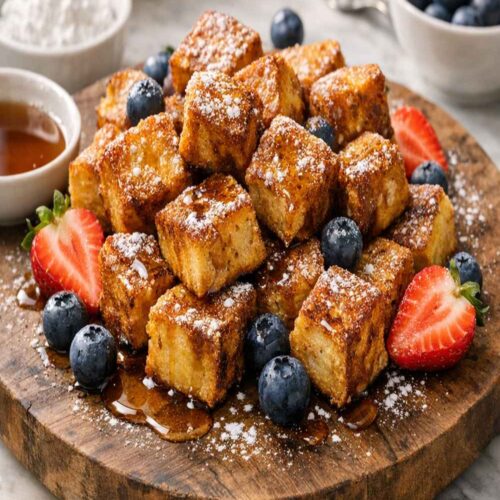
Air Fryer French Toast Bites Recipe

I'm obsessed with breakfast that doesn't require babysitting a skillet. These air fryer French toast bites deliver restaurant-quality results with zero fuss—think golden exteriors, custardy centers, and pure maple flavor in every bite. Pair them with banana peanut butter air fryer creations for a protein-packed brunch, or serve them alongside easy roasted tomato basil soup for an unexpected savory-sweet moment.
Ingredients
- 2-3 tablespoon milk of choice whole dairy, almond, or oat all work; I prefer whole milk for richness
- 1 teaspoon ground cinnamon Ceylon cinnamon has sweeter, more delicate notes than cassia
- 1 tablespoon pure maple syrup (Grade A or B, never pancake syrup
- 1-2 teaspoon avocado oil (high smoke point, neutral flavor
- 3 large eggs room temperature, preferably pastured for richer flavor
- 6 ounce hearty white bread such as sourdough or day-old French bread, cut into 1-inch cubes about 4-5 slices; stale bread absorbs custard better
- ¼ teaspoon fine sea salt balances sweetness and amplifies other flavors
- Powdered sugar for topping optional but traditional
- Fresh strawberries, sliced (or maple syrup, or both, or neither
- Pinch of freshly grated nutmeg optional but adds sophisticated depth; use a microplane
Instructions
Step 1: Build Your Custard Base
- Crack your three eggs into a large mixing bowl and add the 2-3 tablespoons of milk. I use a fork rather than a whisk here—fewer dishes. Whisk vigorously until the mixture is completely homogeneous and pale yellow, which takes about 60-90 seconds. Now add your 1 tablespoon of pure maple syrup and ¼ teaspoon of salt. Whisk again for another 30 seconds until the salt dissolves completely and you don't see any crystalline grains. The salt is critical here from a culinary standpoint—it amplifies the maple flavor by suppressing bitterness, but it also plays a nutritional role by supporting electrolyte balance.

Step 2: Add Bread and Spice
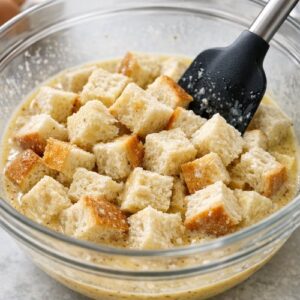
- Here's where texture begins. Add all your bread cubes (approximately 6 ounces) directly into the custard bowl. Using a rubber spatula or tongs, gently fold and turn the bread cubes in the mixture for about 2 minutes. You're looking for complete saturation—no dry spots visible on any cube. As you fold, sprinkle your 1 teaspoon of ground cinnamon evenly over the mixture. I usually add it in two stages (½ teaspoon at a time) so it distributes evenly rather than clumping. If you're feeling adventurous, add that pinch of nutmeg here too. Here's the pro tip: if you notice a small pool of custard at the bottom of the bowl after folding, let the bread sit undisturbed for 2-3 minutes. The bread will continue absorbing that liquid. Then stir gently once more. You want every cube glossy and saturated, but not sitting in liquid.
Step 3: Prep Your Air Fryer Basket
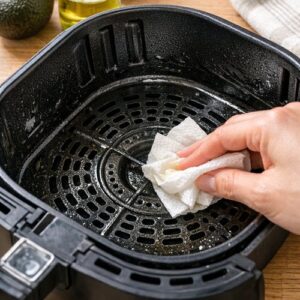
- Take a paper towel and generously wipe 1-2 teaspoons of avocado oil across the bottom and sides of your air fryer basket. Alternatively, line the basket with air fryer-safe parchment paper—this completely eliminates sticking and makes cleanup effortless (though you sacrifice the tiniest bit of crispness on the bottom). The oil matters here. Avocado oil has a smoke point of 520°F, well above our 350°F cooking temperature, and it won't impart any flavor. Coconut oil works too, but it'll add subtle coconut notes. Olive oil is too delicate—skip it.
Step 4: Air Fry With Precision
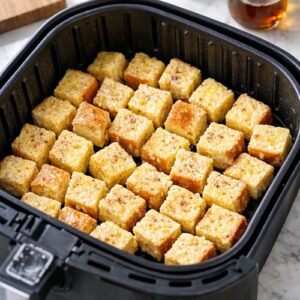
- Pour your custard-coated bread cubes into the prepared basket in a single layer, avoiding overlap as much as possible. Some cubes will naturally touch—that's fine. But try to give them space so air circulates all around. Set your air fryer to 350°F for 10 minutes. At the 5-minute mark, pause cooking and shake the basket vigorously. Any cubes that have stuck together should separate now. You'll see them starting to turn golden-brown on the edges—this is exactly right. Return to cooking for the final 5 minutes. Pull them out when they're golden-brown and crispy on the outside, with a gentle firmness when pressed. They should sound crispy, not soft. If they still look pale, add 1-2 minutes more.
Step 5: Serve Immediately (Or Cool for Storage)
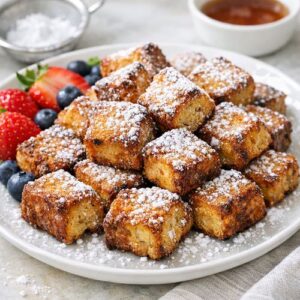
- Transfer your air fryer French toast bites to a serving plate immediately. They'll continue crisping slightly as they cool. Dust with powdered sugar, drizzle with maple syrup, top with fresh strawberries, or enjoy them naked—the custardy interior is honestly spectacular on its own. Serve while warm and crispy. This is the moment of maximum textural contrast, and you absolutely want to capitalize on it. If you're prepping ahead for storage, let them cool completely to room temperature before storing.
Notes
- Use day-old or stale bread - Fresh bread falls apart. Stale bread has less moisture content and firmer structure, so it holds together perfectly during cooking and absorbs the custard more evenly.
- Don't oversaturate the bread - The goal is glossy, not dripping. Oversaturated bread becomes mushy instead of creamy inside and crispy outside.
- Shake the basket at the 5-minute mark—don't skip this - This is non-negotiable. It separates stuck pieces and ensures even browning on all sides.
- Experiment with bread varieties - Brioche creates buttery-rich bites; challah adds subtle sweetness; sourdough brings tangy complexity. Each bread type changes the flavor profile entirely.
- Customizable spice levels - Double the cinnamon if you love it bold. Add vanilla extract (½ teaspoon) for floral notes. Try cardamom or allspice for warm spice variations.
- Temperature matters - Don't skip the room-temperature eggs step. Cold eggs take longer to incorporate and create uneven custard distribution.
Nutrition
Calories: 357kcalCarbohydrates: 50gProtein: 17gFat: 10g
Tried this recipe?Let us know how it was!